|
Tha Lake District
National Park Authority is considering two applications for strengthening bridges over the line in a way which would block
the route for trains in the future. Please go to the URGENT NOTICES page for more information about objecting to these plans
CLICK HERE TO GO TO URGENT NOTICES PAGE
CKP Railways plc prepared a design package for the railway between 2001 and 2005. A Business Case report developed by the Northwest
Regional Development Agency (NWDA) in 2007 showed a financial case and many other benefits for the Lake District and
beyond. Communities, businesses,
Train Operators and the Lake District National Park Authoirty want the railway. Despite all this, Cumbria County Council refuses to even express support for
the project. More details
in Update 64 - available for download via the "Newsletter" page. ===============================================================================================================
TV feature about the Railway Project (September 2017):
Click here to view on YouTube
================================================================================================================
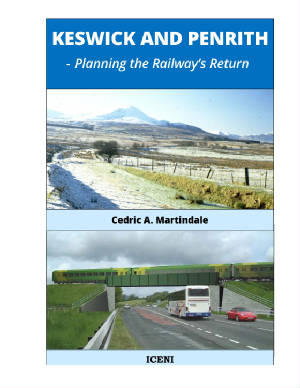
The whole Railway Project story brought up to date in a new book ...
Available now in printed format
and as a pdf download
Please click here to download a book order form
For every copy bought direct from the
publishers, 25% of the price is passed to the Railway Project. ====================================================================
Please click here to download a "questions and answers" leaflet
Please click here to download our Updates subscription form
========================================================================
This will be a modern Railway,
with passenger trains running direct to Keswick from other parts of the country. The
line will be independently built and managed by CKP Railways plc, which is locally based. This type of independent operation, connecting into the National Rail Network, was made possible by
the 1993 Railways Act. It will be the first project
in the UK to re-open and operate a complete line in this way for an all day, every day public service.
|
|
| Virtual reality image of new bridge across the A66 at Beckses, west of Penruddock. |
|